
The Great Wildebeest Migration is Africa’s most dramatic wildlife spectacle.
Every year, millions of animals move across vast plains in search of fresh grass.
As a result, this journey defines the rhythm of East Africa’s ecosystems.
Moreover, it attracts travelers seeking authentic Great Migration safari experiences.
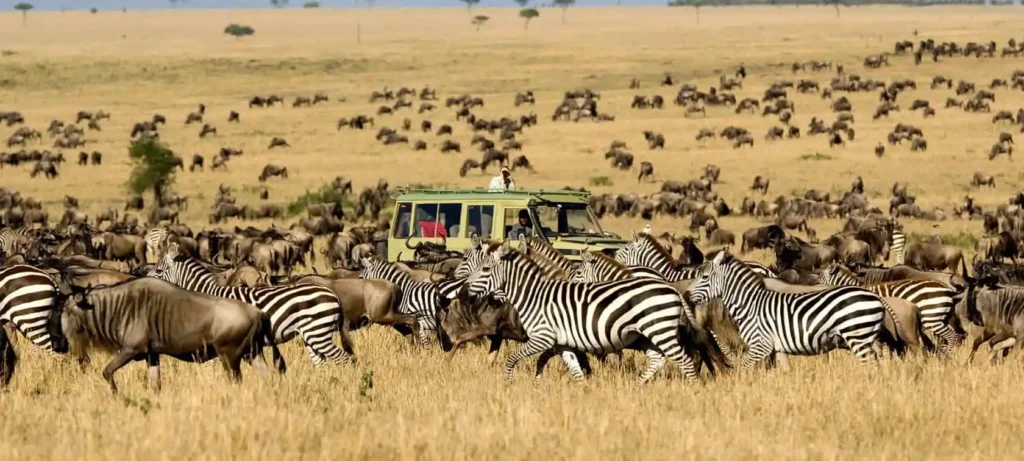
What Is the Great Wildebeest Migration?
The Great Wildebeest Migration is a continuous circular movement of herbivores.
It mainly includes wildebeests, zebras, and gazelles.
Together, they travel between Tanzania and Kenya.
Consequently, this event is known as the Great Migration in Africa.
Key highlights include:
- Over 1.5 million wildebeests
- Around 300,000 zebras
- Thousands of predators following closely
Therefore, it remains the world’s largest wildlife migration.
Where Does the Great Wildebeest Migration Take Place?
The migration spans two iconic destinations.
These areas offer distinct landscapes and viewing experiences.
As a result, timing and location matter greatly.
Main regions include:
- Serengeti National Park, Tanzania
- Masai Mara National Reserve, Kenya
Both parks form one shared ecosystem.
Hence, animals cross borders freely.
The Great Wildebeest Migration Route Explained
The migration follows seasonal rainfall patterns.
Fresh grass determines the direction of movement.
Therefore, the route changes slightly each year.
Serengeti National Park, Tanzania
The Serengeti hosts the migration for most months.
It provides vast open plains and predator action.
Additionally, it offers excellent photography opportunities.
Southern Serengeti and Calving Season
From January to March, herds gather in the south.
This period marks the calving season.
During this time, thousands of calves are born daily.
As a result, predator encounters increase significantly.
Great Migration River Crossings
Between June and September, river crossings dominate.
The Grumeti and Mara rivers create dramatic scenes.
However, crossings depend on water levels and herd pressure.
Therefore, patience often rewards safari-goers.
Best Time to See the Great Wildebeest Migration
The best time to see the Great Migration depends on interests.
Each phase offers unique experiences.
Thus, planning should match expectations.
Great Migration Calendar by Month
- January – March: Calving season in Southern Serengeti
- April – May: Herds move north during long rains
- June – July: Grumeti River crossings begin
- August – September: Mara River crossings peak
- October – December: Herds return south to Serengeti
Consequently, every month provides value.
The Great Wildebeest Migration in Masai Mara
The wildebeest migration in Masai Mara occurs mid-year.
Typically, herds arrive from late July.
They remain until October, depending on rainfall.
When Wildebeests Arrive in Masai Mara
Most wildebeests enter the Masai Mara between July and August.
This period features intense river crossings.
Moreover, predator sightings increase dramatically.
Therefore, this season suits first-time visitors.
Serengeti Wildebeest Migration vs Masai Mara
Both destinations offer exceptional sightings.
However, each delivers a different safari atmosphere.
Serengeti advantages:
- Longer migration presence
- Fewer crowds
- Vast open landscapes
Masai Mara advantages:
- Compact area
- Easier wildlife spotting
- Iconic river crossings
Thus, combining both creates a complete Great Migration safari.
Planning the Perfect Great Migration Safari
Proper planning enhances the experience significantly.
Several factors influence safari success.
Therefore, expert guidance matters.
Consider the following tips:
- Choose travel dates based on migration phases
- Select camps near migration routes
- Allow flexible schedules for river crossings
- Book early during peak seasons
Additionally, guided safaris improve safety and sightings.
Why the Great Migration Matters Globally
The Great Migration in Africa supports biodiversity.
It sustains predators and grassland health.
Moreover, it supports local conservation economies.
Therefore, responsible tourism plays a vital role.
Travelers contribute by:
- Supporting eco-friendly lodges
- Respecting wildlife distances
- Booking with licensed operators
As a result, future generations benefit.
Conclusion: Experience Nature at Its Most Powerful
The Great Wildebeest Migration is more than a safari event.
It represents survival, balance, and natural rhythm.
Whether in the Serengeti or Masai Mara, every moment feels raw.
Therefore, choosing the right time and place is essential.
If you want expert planning, explore our Great Migration safari packages.
You may also read our guides on Best Safari Destinations in Kenya and Serengeti Travel Tips.
Start planning today, and witness nature’s greatest journey firsthand.